
Pool Filter Sand Change in McKinney, TX
Pool filter sand change in McKinney from a family-owned, TDLR-licensed team. We inspect the laterals, clean the tank and refill it with manufacturer-approved sand.

Pool Filter Sand Change From a Local McKinney Team
Family-owned, TDLR-licensed and rated 5.0 on Google
A pool filter sand change replaces the worn sand inside your filter tank. New sand has sharp edges that grab dirt. After years of filtering, though, the grains wear smooth, and fine particles start slipping back into the pool. Most filter sand lasts five to 15 years, depending on how hard the filter works and how balanced the water stays.
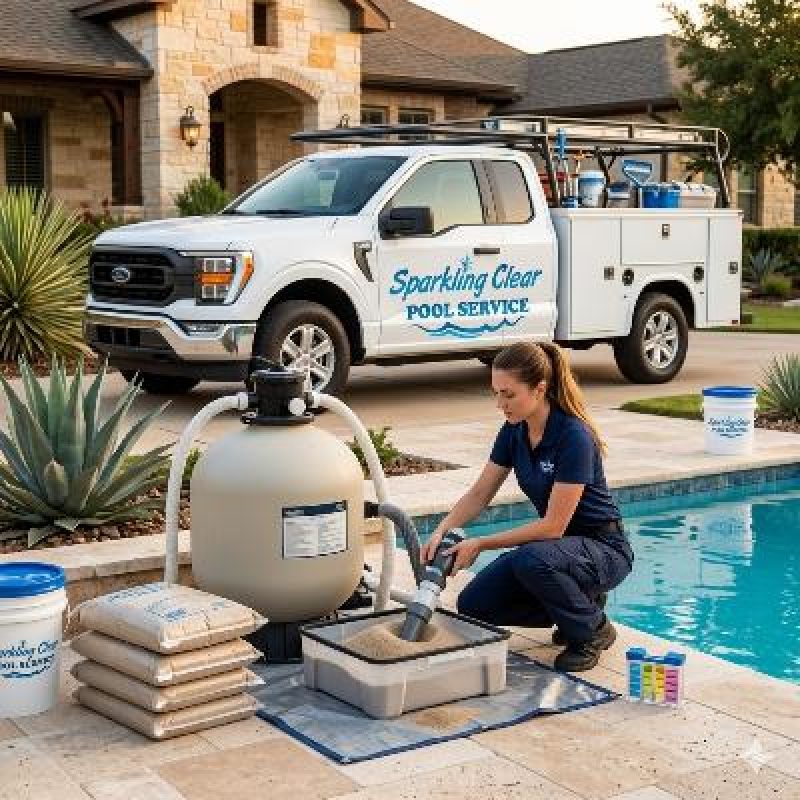
When we change the sand, we don’t just dump and refill. First, we pull out the old sand and inspect the laterals and standpipe, the parts that hold the sand in place and send clean water back to the pool. Then we clean out the tank and refill it with manufacturer-approved sand, in the amount your filter’s label calls for. If anything inside needs parts, you’ll hear about it first.
McKinney backyards put sand filters through a lot. Oak pollen coats the water every spring, and our hard water leaves calcium behind that can cake the sand together. We’ve worked on pools here for more than ten years, from Stonebridge Ranch to Trinity Falls, so we know what that does to a filter over time.
Maybe your water stays hazy even with balanced chemistry, or sand keeps showing up on the pool floor. Either way, call (469) 884-4022 for a free quote, or fill out the form. We’ll take a quick look at the pool and equipment, then give you a price before any work starts. There’s no contract to sign.
Ready for Fresh Filter Sand? Get a Free Quote From Sparkling Clear
Why Sand Filters Wear Out in McKinney
A sand filter is simple. Water flows in, dirt stays behind in the sand, and clean water heads back to the pool. Still, the sand itself doesn’t last forever, and a North Texas backyard gives it plenty of work.
How Filter Sand Traps Dirt
Water enters the top of the tank and works its way down through the sand. Dirt catches in the tiny gaps between the grains, and as it builds up, those gaps shrink. So a sand filter actually catches finer particles as the cycle goes on, down to about 25 microns near the end. Most of that work happens in the top few inches of the bed. Then a backwash reverses the flow, lifts the sand and flushes the trapped dirt out to waste.
How Often to Change Pool Filter Sand
Pool pros call sand a permanent media, but most filter sand needs replacing every five to 15 years. How hard your filter works decides where yours lands in that range. Under a microscope, new sand has sharp, jagged edges, and those edges are what grab and hold dirt. After years of use, the grains wear smooth, and smooth sand lets fine particles slide right through. That’s why the water can stay hazy even when the chemistry checks out. Backwashing cleans the sand, but it can’t put the edges back.
What Pollen Season Does to the Sand Bed
Here in McKinney, oak pollen coats pools from late March into early May. Then cedar elm and ragweed pick up again in fall, until the first hard freeze. All of it lands in the top few inches of sand. Add a summer of sunscreen, lotion and body oils, and the load gets heavier. When oils stick to fine sand particles, they can roll up into mudballs, clumps of sand and gunk that the water flows around instead of through.
How Hard Water Cakes the Sand
Our water is hard, and summer evaporation leaves even more calcium behind. When pH, alkalinity and calcium drift out of balance, scale forms, and one place it builds up is the filter media itself. Calcified sand turns crusty and hard. Flocculants like alum can do something similar over time. They fill the gaps between grains until the bed sticks together in one mass that barely filters.
What a Pool Filter Sand Change Includes
A sand change takes more than pouring new sand into an old tank. Here’s how we handle it:
- Shut off the pump and release the pressure, because a pressurized filter tank can come apart violently
- Remove all of the old sand from the tank
- Inspect the laterals and standpipe for cracks or damage
- Clean out the inside of the tank
- Refill with manufacturer-approved sand, in the amount listed for your filter model
After a refill, new sand needs a few backwash cycles to flush out fines, the tiny sand particles left over from processing. That step matters more than it sounds. If fines stay in the bed, oils cling to them and mudballs form early. Once the filter is back online, its new clean pressure reading becomes your baseline for future backwashing.
The Right Sand, in the Right Amount
Most sand filters call for #20 silica sand. Its grains measure about 0.35 to 0.56 millimeters, small enough to pass a 20-mesh screen but too big for a 30-mesh one. The wrong sand can leave you with poor water quality, sand in the pool or a failed filter. Hayward, for example, recommends only #20 silica sand in its sand filters and lists 300 pounds for its 24-inch ProSeries model.
The amount matters, too. Above the sand bed sits an open space called freeboard, usually about half the depth of the sand. It gives the sand room to lift and expand during a backwash. Overfill the tank, and backwashing takes longer and can shift sand around inside. Manufacturers list how many pounds each model takes, and that number leaves the right freeboard.
Other Media You Can Put in a Sand Filter
Silica sand in the #20 grade is the most common media, but crushed garnet and zeolite can also work in some filters. Zeolite is a porous volcanic material that can catch particles down to about 5 microns, compared with roughly 25 to 100 microns for sand. Its makers also say it absorbs ammonia, which chlorine would otherwise turn into irritating chloramines.
You may have seen glass media for sand filters at the pool store, too. With any of these, check what your filter’s manufacturer approves before you switch, and follow its instructions. When we refill a tank, we use manufacturer-approved sand.
Signs It's Time for Fresh Sand
Sand wears out slowly, so the signs creep up on you. Watch for these:
- Water that stays dull or hazy even when the chemistry checks out
- Pressure that climbs 8 to 10 psi above the clean reading soon after a backwash
- Backwashing far more often than you used to
- Grains that feel smooth, or sand stuck together in clumps or a hard crust
- Mudballs on top of the sand bed when you open the tank
- A filter that hasn’t had new sand in five years or more, or nobody knows when it last did
When the Problem Isn't the Sand
Not every hazy pool needs new sand. Water can also cloud up when someone backwashes too often, when the pump doesn’t run long enough to turn the water over, or when algae is getting started. A sand bed caked with minerals sometimes responds to a sand cleaner soak, flushed out to waste. And if the pressure won’t come down at all after a backwash, our pool filter repair team looks for the cause, such as a blocked return line or a partly closed valve.
Why Sand Ends Up Back in Your Pool
Sand on the pool floor near the returns is a common complaint with sand filters. The laterals at the bottom of the tank have slots that let water through but stop the sand. So when sand shows up in the pool, the usual cause is a lateral that has cracked. Sand that’s too fine for the filter can slip through as well.
That’s one reason we inspect the laterals and standpipe on every sand change. High filter pressure can damage laterals, so a cracked one is worth a closer look at the pressure, too. We replace damaged laterals, and then the tank gets fresh sand.
What Affects the Cost of a Sand Change
We don’t post a set price, since every filter is different. The biggest factor is the size of your tank, because larger filters hold a few hundred pounds of sand. The media your manufacturer calls for matters, too. And if the laterals or standpipe need new parts, we price those before any work starts.
Our quotes are free. We take a quick look at the pool and equipment, then give you a price, with no contract to sign.
What a Sand Change Doesn't Cover
A sand change fixes worn media. Some problems call for a different fix:
- A damaged or leaking tank goes to our pool filter repair team
- An old filter, or one that’s too small for your pool, calls for pool filter installation
- Routine care between sand changes, or care for a cartridge or DE filter, falls under pool filter cleaning
- A pool that has already turned green needs our green to clean treatment first
Sand changes are part of our specialty services. If we find something else wrong while the tank is open, we tell you and price it before any work starts.
How to Make Your Filter Sand Last Longer
Good habits won’t make sand last forever, but they keep it working well between changes:
- Backwash by pressure, when the gauge reads 8 to 10 psi above its clean starting point, and skip the calendar schedule
- Don’t backwash too often, since sand catches its finest particles near the end of a cycle
- Keep pH, alkalinity and calcium in balance, so scale doesn’t calcify the sand
- Give the pump enough run time each day to send all the water through the filter more than once
- Go easy on flocculants like alum, which can glue the sand together over time
- Turn off the pump and open the air relief valve before you move the filter valve or open the tank
Between sand changes, the filter still needs regular care. Our weekly pool service plans include an equipment check on every visit, and the filter gets a full clean twice a year.
Why McKinney Homeowners Call Sparkling Clear for Sand Changes
Sparkling Clear is a family-owned company based in McKinney, and we’ve worked on pools here for more than ten years. Owner Robert Pierce trains every technician on our routes. You’ll see him as “Bob” in our reviews, and he still answers the phone.
We hold TDLR Residential Appliance Installation Contractor License #1066, and Robert holds installer license #448687. You can check both on the TDLR license search. Texas requires that license for pool electrical work like pumps and heaters. So if a sand change turns up a problem elsewhere on the pad, you don’t need a second company. We work on Hayward, Pentair, Jandy and Zodiac equipment, and we’re fully insured.
Our Google rating is 5.0. And if you have a question about your filter’s pressure after the job, call and ask.
How to Book a Pool Filter Sand Change
- Call (469) 884-4022 or fill out the form on this page.
- We take a quick look at your pool and filter, then give you a price.
- Our tech changes the sand, inspects the laterals and standpipe, and cleans out the tank.
- Your filter goes back online with fresh, manufacturer-approved sand.
If we find a problem that new sand won’t fix, you’ll hear about it before any work happens, along with a price. That way, you only pay for what your filter actually needs.
Pool Filter Sand Change FAQs for McKinney Homeowners
Straight answers to the questions we hear most about sand changes. If yours isn’t here, call (469) 884-4022.
Questions About Sand Change Timing and Cost
Yes, eventually. Sand is the part of a sand filter that wears out. New grains have sharp edges that trap dirt, and years of filtering wear them smooth. Backwashing cleans sand but can't sharpen it. Fresh sand gets the filter catching fine particles again.
Usually every five to 15 years. Where your filter lands in that range depends on how hard it works, how balanced the water stays and whether scale or flocculants have caked the sand. Sparkling Clear goes by the sand's condition. Smooth grains, mudballs or a crusted bed mean it's time.
It depends on the size of your filter, since larger tanks hold a few hundred pounds of sand, and on whether any laterals need replacing. Sparkling Clear takes a quick look at the pool and equipment, then gives you a free quote before any work starts.
It's more heavy and messy than hard. The tank has to be shut down and depressurized, the old sand removed and the laterals checked. Then the right amount of the right sand goes back in. Get the grade or amount wrong, and sand can end up in the pool.
Most sand filters call for #20 silica sand, with grains about 0.35 to 0.56 millimeters across. Other sand risks cloudy water, sand in the pool or a failed filter. Sparkling Clear refills with the sand your filter's manufacturer approves, in the amount listed for your model.
More Sand Filter Questions From McKinney Owners
Watch for water that stays dull even with good chemistry, pressure that climbs back fast after a backwash, and backwashing more often than you used to. Inside the tank, smooth grains, mudballs or a hard calcium crust tell the story. Sparkling Clear checks the sand bed first.
Sometimes. Zeolite, a porous volcanic media, can catch particles down to about 5 microns, versus roughly 25 to 100 for sand. Glass media is sold too. Before switching, check what your filter's manufacturer approves. Hayward, for one, recommends only #20 silica sand in its sand filters.
Sand on the pool floor usually means a cracked lateral, since intact laterals have slots too small for sand to pass. Sand that's too fine can slip through as well. Sparkling Clear opens the tank, inspects the laterals and standpipe, and replaces damaged laterals before refilling.
A sand change covers more than new sand. Sparkling Clear shuts the system down, removes the old sand, inspects the laterals and standpipe, cleans out the tank and refills it with manufacturer-approved sand. Then the new sand needs a backwash to flush out fines, the dust that can lead to mudballs.
Check the label on your filter tank. Manufacturers list the pounds of sand each model takes, and that amount leaves the right open space above the bed for backwashing. Most modern high-rate sand filters use sand alone, without a gravel layer. If your label calls for gravel, follow it.