Pool Heater Installation in McKinney, TX
Pool heater installation in McKinney from a family-owned, TDLR-licensed team. We install gas heaters and heat pumps sized to your pool and target temperature.

Pool Heater Installation From a Local McKinney Team
Family-owned, TDLR-licensed and rated 5.0 on Google
Pool heater installation lets you swim earlier in spring and later into fall. Sparkling Clear installs gas heaters and heat pumps from Hayward, Pentair, Jandy and Zodiac. We size each one to your pool’s surface area and the temperature you want, so the water warms up in a reasonable time and you don’t pay for more heater than you need.
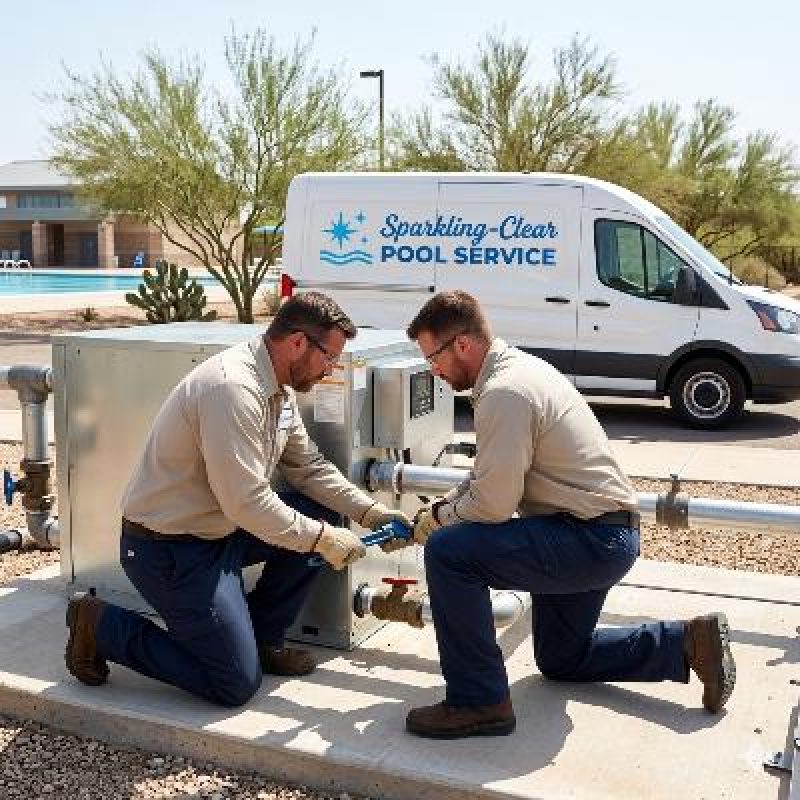
Every install starts with a look at your whole pad, from the plumbing to the power supply. A gas heater needs a gas line, and a heat pump needs its own electrical circuit, so we check what you already have before we give you a price. Then we explain your options and what each one costs before any work starts. Already have a heater that’s acting up? Our pool heater repair team can look at it first.
We’ve worked on McKinney pools for more than ten years, from Stonebridge Ranch to Trinity Falls. So we know how a gusty spring wind pulls heat off the water, and how our hard water leaves scale inside a heater. That’s why we size and place every heater with both in mind.
Owner Robert Pierce trains every technician, and Texas requires a TDLR license for pool electrical work like heaters. We hold one, and we’re fully insured. Call (469) 884-4022 for a free quote, or fill out the form, and we’ll come take a look at your pool.
Ready for a Warmer Pool? Get a Free Quote From Sparkling Clear
Why McKinney Pools Lose Heat So Fast
A pool loses heat every hour of the day, and most of it leaves through the surface. So picking the right heater for a North Texas backyard starts with knowing where that heat goes.
Spring Wind Pulls Heat Off the Water
Evaporation causes about half of a pool’s heat loss. Every gallon that evaporates carries off about 8,730 BTUs, and wind, dry air and warm water all speed it up. Between March and May, McKinney gets plenty of gusty south wind, so an open pool can shed heat faster than you’d guess, even on a sunny afternoon.
Wind also cools the water directly. As air moves across the surface, it carries heat away, the same way blowing on hot coffee cools it. That convection accounts for 15% to 25% of heat loss. Then, on a clear fall night, a warm pool radiates heat to the open sky, which adds another 20% to 30%. Only about 5% escapes through the walls and floor.
How Warm Your Pool Water Should Be
Comfort is personal, but there are useful targets. About 82°F is a comfortable mark for everyday swimming. Fitness swimmers often like it a few degrees cooler, while toddlers usually need it warmer. A spa should stay below 104°F. The bigger the gap between the water you have and the water you want, the more heater your pool needs.
Gas Heater vs. Heat Pump in North Texas
We install both types, and each one fits a different way of using the pool. The choice comes down to how fast you want heat, when you swim and what your pad can supply.
How a Gas Pool Heater Works
A gas heater burns natural gas or propane to heat the water as it flows through. Because it makes its own heat, a cold evening doesn’t cut its output. That makes gas the usual pick for warming an attached spa on short notice or for swimming in cooler months. It does need a gas line at the pad. If natural gas isn’t available at your home, propane is the other fuel option.
How a Heat Pump Works
A heat pump doesn’t burn anything. Instead, it uses a compressor and refrigerant to pull heat out of the outdoor air and move it into the water. For each unit of electricity it uses, it delivers three to eight units of heat, which is what makes it efficient. The catch is the weather. The colder the air, the less heat a heat pump can pull, so its output drops on chilly days.
Newer models with scroll compressors put out more heat at lower air temperatures, with fewer moving parts and less noise. Every heat pump also needs a dedicated electrical circuit.
Which One Fits Your Pool
For a lot of McKinney owners, the answer depends on the calendar. If you mainly want to stretch the season into spring and fall, when afternoons are still mild, a heat pump handles that well. On the other hand, if you want a hot spa on a January night or quick heat on short notice, gas is the better fit. During our quick look, we’ll talk through how you use the pool and recommend the type that matches.
How We Size a New Pool Heater
Sizing is where a lot of heaters go wrong. One that’s too small runs for hours and still struggles to reach your target. Meanwhile, one that’s too large costs more to buy and install than it needs to.
Surface area matters most for keeping a pool warm, since that’s where the heat escapes. Water volume matters more when you heat from cold, like warming a spa before a soak. Wind and shade around the pool count too, so we look at the yard as well as the pad.
The BTU Math Behind Pool Heater Sizing
There’s simple math behind the first heat-up. Multiply your pool’s gallons by 8.33, then by the number of degrees you want to raise it. For example, warming a 15,000-gallon pool by 10 degrees takes about 1.25 million BTUs. Holding that temperature usually takes much less each day, and a cover cuts it further.
How Long It Takes to Heat a Pool
Next, divide the BTUs your pool needs by what the heater puts into the water each hour. That gives you the heat-up time. Using the same 15,000-gallon pool, a heater adding 250,000 BTUs an hour needs about five hours, before surface losses. In the worst case, an uncovered pool can lose as much as half of that temperature rise. A cover cuts those losses to about 15% to 25%.
A heat pump on a cool day takes longer, since its output drops with the air temperature. That’s one more reason we ask when you plan to swim before we recommend a size.
What Happens During a Pool Heater Installation
Pool heater replacement and a first-time install follow the same steps. The only difference is whether there’s an old unit to remove.
- Inspect the equipment pad, plumbing and electrical supply.
- Remove the old heater, if there is one.
- Set the new heater on a level, non-combustible base with the clearances its maker requires.
- Plumb it in after the filter and ahead of any chlorinator, with check valves where the manufacturer calls for them.
- Wire and program it, then tie it into your existing controls if you have them.
- Test flow and pressure.
- Walk you through the controls.
That plumbing order matters. Filtered water keeps debris out of the heater. Feeding chemicals after it also keeps strong doses from backing into the heat exchanger, where they can corrode it or leave scale.
What Affects Pool Heater Installation Cost
Every heater install is priced after a quick look, because two pads rarely need the same work. These are the factors that change the cost:
- Gas heater or heat pump, and the size your pool needs
- Whether a gas line or a dedicated electrical circuit is already at the pad
- Plumbing changes, such as new valves, a bypass or check valves
- A new level, non-combustible base if the pad has no room
- Removing an old heater
- Tying the heater into your existing controls
We explain your options and what each one costs before any work starts. That way, you can weigh a bigger heater against a longer heat-up time with real numbers in front of you.
Is a New Heater Right for Your Pool?
A heater makes the most sense if you’d swim more with warmer water. That includes families with young kids, folks with an attached spa and anyone who wants to use the pool in April or October.
It’s also worth a look if your current heater is old and struggling. Start with our pool heater repair team, who will find the problem and price the fix first. If a repair doesn’t make sense, we’ll say so and walk you through replacement options.
What a Heater Install Doesn't Cover
A heater install covers choosing, sizing, plumbing, wiring and setting up the new unit. It’s one part of our pool equipment installation work, and a few related jobs live on other pages:
- Problems with an attached spa’s pump, jets or controls, which fall under spa repair
- A new pump to go with the heater, covered under pool pump installation
- Running the heater, lights and spa from your phone, which comes with pool automation
If your pad needs any of these, we’ll tell you before the install starts.
How to Keep Heating Costs Down
A new heater works best with a few habits around it:
- Cover the pool when nobody’s swimming. A cover blocks evaporation, radiation and convection, about 95% of heat loss, and can cut heating costs by 50% to 70%.
- Use a bubble cover on sunny days, since it can soak up about 80% of the sun’s energy hitting it and pass that heat to the water.
- Block the wind with a fence, hedge or row of potted plants on the windy side.
- Keep the water balanced. Low pH corrodes the copper inside most heaters, and high calcium leaves scale that makes a heater less efficient.
- Keep the filter clean, so the heater gets steady water flow.
- Keep sprinklers and roof runoff off a gas heater, and don’t stack anything on top of it.
Balanced water also helps a heater last. Our weekly pool care plans test and balance the water on every visit, which protects the heater, too.
Why McKinney Homeowners Choose Sparkling Clear for Heaters
Sparkling Clear is family-owned and based in McKinney, and we’ve worked on pools here for more than ten years. Owner Robert Pierce trains every technician on our routes, and he still answers the phone.
Texas requires a TDLR license for pool electrical work like heaters. We hold Residential Appliance Installation Contractor License #1066, Robert holds installer license #448687, and we’re fully insured. You can check both on the TDLR license search.
We also install pumps, filters and lights, so your new heater fits with everything else on the pad. And our Google rating is 5.0.
How to Start Your Pool Heater Installation
- Call (469) 884-4022 or fill out the form on this page.
- We take a quick look at the pool and equipment, then give you a price.
- Pick gas or heat pump and the size that fits, with the cost of each option laid out.
- We install the heater, test it and walk you through it.
If y’all already know which heater you want, tell us when you call. We’ll check that it fits your pool and pad before you commit.
Pool Heater Installation FAQs for McKinney Homeowners
Straight answers to the questions we hear most about pool heater installation. If yours isn’t here, call (469) 884-4022.
Questions About Heater Cost, Size and Heating Time
It depends on the heater type and size and on what your pad already has. A gas heater needs a gas line, and a heat pump needs a dedicated circuit, so adding either one where none exists raises the cost. Sparkling Clear gives you a price after a quick look.
Yes, most pools can take one. It needs room on the pad, a level, non-combustible base, and a gas line or a dedicated circuit for a heat pump. Sparkling Clear plumbs it in after the filter and ahead of any chlorinator, so debris and strong chemicals stay out of it.
Figure 8.33 BTU per gallon for each degree. Raising a 10,000-gallon pool 10 degrees takes about 833,000 BTU, so a heater adding 200,000 BTU an hour needs a little over four hours, plus surface losses. A heat pump takes longer on cool days, and a cover shortens the wait.
Cover it. Evaporation, radiation and convection cause about 95% of a pool's heat loss, and a cover can cut heating costs by 50% to 70%. A wind block helps, too. When you need a heater, a heat pump delivers three to eight units of heat per unit of electricity.
It depends less on the calendar than on the water. Most heaters have copper in the heat exchanger, and low pH corrodes it, while high calcium leaves scale that cuts efficiency. Feeding chemicals after the heater protects it, too. Weekly testing and balancing gives a new heater its best shot.
More Heater Questions From McKinney Owners
Size it to the pool's surface area and your target temperature, then check how fast it heats the spa. Keeping a pool warm depends on surface loss. Heating a spa from cold depends on volume. A spa should stay below 104°F. Sparkling Clear sizes for both.
For gas, divide the heater's BTU per hour by 100,000 to get therms per hour. Then multiply by run hours and the price per therm on your gas bill. A heat pump only uses electricity, mostly for its compressor. A cover lowers either bill.
We don't recommend it. Texas requires a TDLR license for pool electrical work like heaters, and a gas heater needs proper venting, clearances and a level base. Unburned propane is heavier than air and can collect inside a heater, an explosion risk. Sparkling Clear holds TDLR license #1066.
Yes. It needs a level, non-combustible base like concrete, the clearances its maker lists and nothing stacked on top. In a windy spot, keep it at least three feet from a wall or behind a wind block. Sprinklers shouldn't hit it, either. Sparkling Clear checks all of it.
Not always, but it's a good time to look. A heater needs steady water flow, and if the pump runs on a timer, the heater should shut off before the pump stops. Sparkling Clear also handles pool pump installation and pool automation.