Pool Heater Repair in McKinney, TX
Pool heater repair in McKinney from a family-owned, TDLR-licensed team. You get a price first, and we usually fix it the same or next day.

Pool Heater Repair From a Local McKinney Team
Family-owned, TDLR-licensed and rated 5.0 on Google
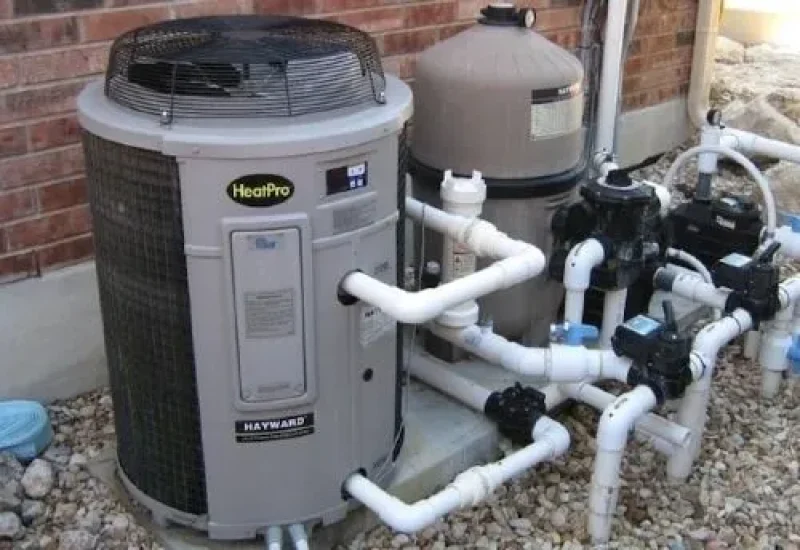
Pool heater repair starts with finding out why the heat stopped. A gas heater that won’t light and a heat pump that runs without warming the water look alike from the patio. Still, the causes are very different, which is why we test before we replace anything. We repair natural gas, propane and heat pump models from Hayward, Pentair, Jandy and Zodiac, plus Raypak heaters.
Here’s how a repair call goes. First, your tech checks the heater and everything feeding it, from water flow and valves to the gas or power supply and the safety switches. Then we tell you what failed and give you a price before any work starts. We use manufacturer-approved parts and can usually fix it the same or next day, depending on the season.
We’ve worked on McKinney pools for more than ten years, so we know what our hard water does to a heat exchanger. We also know what a hard freeze does to a heater left full of water. Owner Robert Pierce trains every technician on our routes. And if a repair doesn’t make sense on an older unit, we say so and walk you through replacement options.
We cover every McKinney ZIP code, from Tucker Hill and Adriatica to Trinity Falls, and there’s no contract to sign. Call (469) 884-4022 for a free quote, or fill out the form, and we’ll get your water warm again before the next cool weekend.
Heater Won't Heat? Get a Free Quote From Sparkling Clear
Why Pool Heaters Need Repair in North Texas
Many McKinney owners only run their swimming pool heater in spring and fall, so problems tend to show up on the first cool weekend. In North Texas, three things do most of the damage.
Hard Freezes Crack Heaters Left Full of Water
Water expands when it freezes, and a heater holds water inside its heat exchanger. In February 2021, DFW stayed at or below freezing for 139 straight hours and dropped to minus 2 degrees, according to the National Weather Service. That storm cracked equipment in backyards across Texas, and keeping pumps running through the coldest nights was the standard advice.
Freeze damage can hide for months. Usually, the leak shows up at spring start-up, the first time you fire the heater.
How Hard Water Scales a Heat Exchanger
Calcium dissolves less easily as water gets hotter, and the surfaces inside a heater run hotter than the pool. That makes the heat exchanger one of the first places scale forms. Our hard fill water also adds more calcium every time you top off after evaporation.
As scale builds, the heater loses efficiency, so it burns more gas or power for the same warmth. Scale in the plumbing can also restrict flow. Low flow then trips the heater’s safety switches, and the heater shuts down.
Why Low pH Corrodes Copper Heater Parts
Most heaters have a copper alloy in the heat exchanger. When pH drops too low, the water turns corrosive and slowly dissolves that copper. A blue-green tint in clear water, or blue-green stains on the plaster, often trace back to copper from the heater or pump. Left alone, the corrosion can eat through the exchanger until it leaks.
What Happens on a Pool Heater Repair Visit
A pool heater that’s not heating, or not working at all, isn’t always a heater problem. That’s why your tech checks the whole system before pointing at a part:
- The pump, and whether enough water flows through the heater
- Filter pressure, every valve, and the bypass if your pad has one
- The thermostat setting and the system switch or automation
- Gas supply, gas valve and pilot on gas and propane heaters
- Power, breaker and compressor on heat pumps
- The heat exchanger, for scale, corrosion and leaks
- Venting, airflow and soot on gas units
Once we know what failed, we explain it and give you a price before any work starts. Folks call it a pool heater service call, and the goal never changes: find the real cause first.
The Safety Switches That Shut a Heater Down
Heaters are built to stop when something looks wrong. A high-temperature limit switch shuts the heater off if the water gets too hot. A flow or pressure switch keeps it off when too little water moves through it. On pads with a timer, a fireman’s switch turns the heater off before the pump stops. These switches protect the heater, so a tripped switch usually points to a problem somewhere else.
What Pool Heater Error Codes Usually Mean
Error codes are the heater’s way of naming the switch or step that failed. The codes differ by brand, so a Pentair code won’t match a Raypak one. Still, most codes come back to the same short list: low water flow, high temperature, ignition, or a sensor out of range. We read the code, then confirm the cause.
When a Gas Heater Won't Light
Gas and propane heaters light in one of two ways. Older millivolt heaters keep a small pilot burning all the time, and a thermocouple turns its heat into the tiny current that opens the gas valve. Newer heaters use electronic ignition, which sparks the pilot when the heater calls for heat. Either way, the pilot then lights the main burner.
Basic pool heater troubleshooting starts outside the heater. When a gas unit won’t fire, rule these out first:
- The pump is off, or flow is too low and the low-flow switch has tripped
- A filter or plumbing valve sits partly closed
- The thermostat is set below the water temperature
- Gas is off at the heater’s valve or the supply valve, or the propane tank is empty
- The pilot went out from low gas pressure, poor air supply or a venting problem
- Sprinklers or roof runoff keep soaking the heater and putting the pilot out
If you hear clicking or sparking but the heater never lights, stop there and call a technician. Propane is heavier than air, so unlit gas can collect inside the heater. If it lights all at once, the blast can blow out through the front panel.
When a Heat Pump Runs Without Heating
A heat pump doesn’t burn anything. Instead, it pulls heat out of the outside air with a refrigerant and a compressor, then hands that heat to the pool water. Because of that, the colder the air gets, the less heat it can pull. On a raw, windy morning, even a healthy heat pump can struggle.
So the first question is whether it’s broken or just outmatched. If the heat pump is running but not heating on a mild day, we check flow, the pressure switch, the thermostat and the heat exchanger for scale. We also check the power side, since a heat pump needs its own dedicated circuit. Texas requires a TDLR license for pool electrical work like this.
What Affects the Cost to Fix a Pool Heater
We don’t post repair prices, because two heaters with the same symptom can need very different fixes. These are the factors that move the price:
- Which part failed, and whether it’s on the gas, electrical or water side
- Whether the heater is a natural gas, propane or heat pump model
- How far scale or corrosion has spread inside the heater
- Whether the root cause, like low flow or off-balance water, needs fixing too
The quote is free. We take a quick look at the heater and the rest of the pad, then give you a price before any work starts.
Should You Repair or Replace Your Heater?
Most heater failures come down to one worn or broken part, and we can swap that part out. A worn igniter, a bad switch or a failed thermostat doesn’t mean you need a new heater.
Replacement starts to make sense when corrosion has eaten into the heat exchanger or it leaks. It also makes sense when the heater keeps failing one part after another, or when the repair price nears the cost of a new unit. If that’s your heater, we’ll tell you straight and walk you through pool heater installation options sized to your pool.
Signs Your Heater Needs Repair
Call us if you notice any of these:
- The heater clicks or sparks but never lights
- It shuts off before the water reaches your set temperature
- Water drips or puddles under it, especially at spring start-up
- The top of the heater is black, or the exhaust looks dark
- The cabinet looks warped, buckled or scorched
- Clear water has a blue-green tint, or blue-green stains appear
- Any part of the heater sat under water after a storm
Some of these can be harmless. For example, a drip that only shows while the burner runs may just be condensation from heating very cold water. Others mean the heater shouldn’t run at all until someone checks it.
What Heater Repair Doesn't Cover
A few related jobs live on their own pages:
- Adding a heater to a pool that has never had one, which our pool heater installation team handles
- Problems with an attached spa’s own pump, jets or controls, which our spa repair team handles
- Trouble with the pump itself, covered by pool pump repair
- Damage to the filter itself, covered by pool filter repair
If a weak pump or clogged filter is starving the heater, we’ll say so and price that fix along with the heater.
How to Protect Your Heater Between Repairs
Most early heater wear is preventable. These habits help:
- Keep pH between 7.4 and 7.6, since low pH is what corrodes copper heater parts
- Keep alkalinity and calcium in range too, so the water neither scales nor corrodes
- Never drop chlorine tablets in the skimmer, because that sends strong chlorine straight through the heater
- Keep the filter clean and the valves open, so the heater always gets full flow
- Keep plants and other objects off the top of the heater, and aim sprinklers away from it
- Before a hard freeze, keep the pump running, or have the heater drained if the pool will sit
- Use a pool cover on cool nights to hold in the heat you paid for
If the heater ever overheats or the gas won’t shut off, turn off the manual gas valve to the heater and call us. If chemistry isn’t your thing, our weekly pool service tests and balances the water on every visit.
Why McKinney Owners Call Sparkling Clear for Heater Repair
Sparkling Clear is family-owned and based in McKinney, and we’ve worked on pools here for more than ten years. Owner Robert Pierce trains every technician on our routes. He still answers the phone, and folks in our reviews know him as Bob.
Heater work mixes water, gas and electricity, so licensing matters. We hold TDLR contractor license #1066, and Robert holds his own TDLR license, #448687. You can look up both on the TDLR license search. We’re also fully insured and rated 5.0 on Google.
Heaters are one part of the pool repairs we handle across McKinney. So if the heater checks out and the trouble is elsewhere on the pad, we’ll find it and price that fix too.
How to Schedule Pool Heater Repair
- Call (469) 884-4022 or fill out the form on this page.
- Tell us what the heater is doing, plus any code on the display.
- We take a quick look at the heater and the pad, then give you a price.
- Once you approve it, we make the repair, usually the same or next day.
When the job’s done, we’ll tell you what caused the failure and how to keep it from coming back.
Pool Heater Repair FAQs for McKinney Homeowners
Straight answers to the questions we hear most about heater repair. If yours isn’t here, call (469) 884-4022.
Questions About Heaters That Won't Light or Heat
Usually something outside the heater is stopping it. Check that the pump is running, the filter is clean, the valves are all the way open and the thermostat sits above the water temperature. On gas units, make sure gas is on and propane has fuel. Still nothing? Call Sparkling Clear.
Clicking or sparking without a flame means the ignition is trying, but the gas isn't lighting. Low gas pressure, poor air supply or a venting problem can cause it. Don't keep cycling it, especially on propane, since unlit propane collects inside the heater. Call Sparkling Clear for a licensed tech.
Most often, the heater isn't getting enough water flow. A dirty filter, a closed valve, a bypass out of adjustment or a pressure switch set wrong can shut it down early. So can a thermostat out of calibration. Sparkling Clear checks the whole flow path first, then the heater.
A heat pump pulls heat from the outside air, so on cold days it has less to work with. On a mild day, though, cold water points to a fault. Check the filter and valves for low flow first. Sparkling Clear then checks for scale, switch and electrical problems.
Each brand uses its own codes, so your heater's manual lists the exact meaning. Most codes point to low water flow, high temperature, ignition trouble or a sensor fault. Sparkling Clear repairs Hayward, Pentair, Jandy, Zodiac and Raypak heaters, and we find the real cause before replacing any part.
Questions About Repair Costs and Replacing a Heater
It depends on which part failed and how far the damage spread. A tripped flow switch from a dirty filter is a small fix. A corroded heat exchanger is a big one. Sparkling Clear finds the problem and gives you a free quote before work starts.
Yes, most can. Heaters usually fail at a single part, like an igniter, a switch or a thermostat, and we replace those. The main exception is a heat exchanger that low pH has eaten through or a freeze has cracked. Sparkling Clear repairs natural gas, propane and heat pump heaters.
Repair it if one part failed and the rest is sound. Consider replacing it if the heat exchanger leaks, the heater keeps failing, or the repair costs close to a new unit. Sparkling Clear tells you when a repair doesn't make sense and walks you through replacement options.
An electrician can check the circuit, which helps when a heat pump won't power up. Most heater problems sit elsewhere, in water flow, safety switches, ignition or the gas side. Texas requires a TDLR license for pool electrical work like heaters, and Sparkling Clear holds TDLR license #1066.
Common ones include low water flow, scale in the heat exchanger from hard water, ignition and pilot trouble, and freeze damage that leaks at spring start-up. Low pH also corrodes copper heater parts. Most start small, so call Sparkling Clear at the first odd click, drip or error code.