Pool equipment installation in McKinney from a TDLR-licensed, family-owned team. New pumps, heaters, LED lights and filters, sized to your pool.

When a pump, heater, light or filter is past saving, we install a right-sized replacement. Sparkling Clear has handled pool work in McKinney for more than ten years, and every equipment job starts with a look at the whole equipment pad, so the new part fits with everything around it.
Texas requires a TDLR license for pool electrical work like pumps, heaters, lights and automation. We hold Residential Appliance Installation Contractor License #1066, owner Robert Pierce holds installer license #448687, and we’re fully insured. You can check both on the TDLR license search.
Bigger isn’t better with pool equipment. A pump that’s too strong for your plumbing wastes power, and an undersized heater can run all day without reaching temperature. Before we recommend anything, we look at:
Then we explain your options and what each one costs before any work starts. We install equipment from Hayward, Pentair, Jandy and Zodiac.
Every install follows the same steps:
If a repair makes more sense than a replacement, we’ll say so. Plenty of pumps only need a new motor or seal. Our pool repairs team handles those, usually the same or next day.
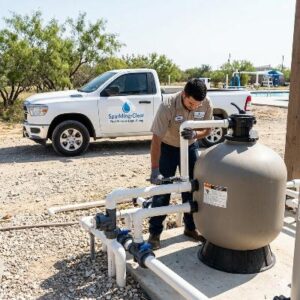
We install cartridge, DE and sand filters sized to your pump and pool. A filter that’s cracked, leaking or stuck at high pressure after a cleaning is usually due, and so is one that’s seven to ten years old. See pool filter installation.
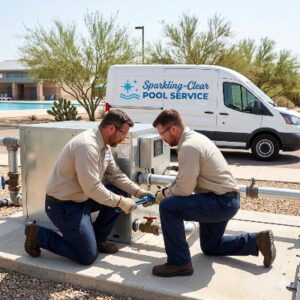
We install gas heaters and heat pumps. Gas heats fast in any weather, while a heat pump costs less to run in a North Texas spring or fall, when the air is still warm. We size it to your pool’s surface area and how warm you want the water. See pool heater installation.
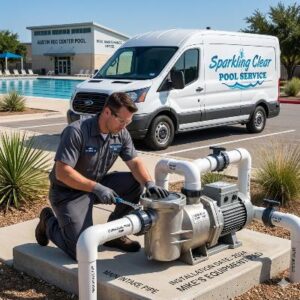
We install variable-speed, dual-speed and single-speed pumps, and variable-speed is the one we suggest for most pools. It runs slower for most of the day, so it uses less power and runs quieter. We program the speed schedule for your pool. See pool pump installation.
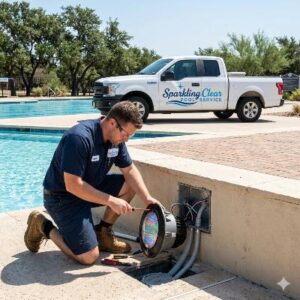
We swap old halogen lights for LED, add color-changing lights and replace failed fixtures. LEDs use far less power than halogen bulbs and last longer. Pool lighting is electrical work in water, so a licensed tech should handle it. See pool light installation.
Long summer run times wear pumps out. A variable-speed pump can filter all day at a low speed instead of running flat out, which is easier on the motor and on your electric bill.
McKinney’s hard water leaves calcium scale inside heaters and on salt cells. Keeping calcium in range protects new equipment, which is one reason a weekly pool cleaning plan pays off after an install.
On freeze nights, water has to keep moving through the equipment. Automation with freeze protection turns the pump on by itself when the temperature drops, so ask us about pool automation when you replace a pump.
New equipment is one part of what we do. The same team cleans pools every week and repairs equipment that still has life in it.

Weekly cleaning plans from $100 a month, with water testing, chemical balancing and a report after every visit.

Pumps, heaters, filters and spas. We explain what's wrong before we fix anything and can usually get there the same or next day.

See everything we do for McKinney pools, from weekly visits to repairs, new equipment and green pool recovery.

Green to clean recovery, pool automation, salt system service and sand changes for sand filters.
Straight answers to the questions we hear most about new pool equipment. If yours isn’t here, call (469) 884-4022.
It depends on what you're replacing and what your pad needs. A single pump swap costs far less than a new pump, filter, heater and automation together, and gas or electrical upgrades add to the job. Sparkling Clear prices each install after seeing your equipment, so you know the cost first.
There's no fixed schedule, but pumps, heaters and filters usually start showing their age at around seven to ten years. Replace a part when it's loud, leaking, won't hold pressure or needs a repair every season. If a fix still makes sense, we'll tell you.
You can handle the plumbing, but the electrical side is the risky part. Texas requires a TDLR license for pool electrical work like pumps, heaters, lights and automation, and a wiring mistake near water is a real safety hazard. Sparkling Clear holds TDLR Residential Appliance Installation Contractor License #1066.
Voltage, yes. The new pump has to match your electrical supply, or the circuit has to change. Horsepower, not necessarily. The right size depends on your plumbing, filter and heater, and an oversized pump wastes power. A variable-speed pump lets us dial in the flow after it's installed.
Not always. Pool equipment works as a system, so one change can affect the rest. A heater needs enough flow from the pump to fire, and the filter has to be sized to the pump and pool. Sparkling Clear checks how each part matches before recommending anything, then explains options and cost first.
Water should flow from the pump to the filter, then through the heater, and only then past a chlorinator or chemical feeder. Filtered water keeps debris out of the heater, and feeding chemicals last keeps strong doses from backing into it and causing corrosion or scale. Sparkling Clear checks that order on every install.
It depends on when you swim. A heat pump costs less to run and works well in spring and fall, when the air is still warm. A gas heater heats faster and works in any weather, which suits spas and winter swimming. Sparkling Clear installs both and sizes either one to your pool.
There's no single best brand. Hayward, Pentair, Jandy and Zodiac all make solid pumps, heaters and filters, and Sparkling Clear installs and repairs all four. The better question is what works with your current automation and plumbing, since mixing brands can limit what your controller runs.
Yes. Corrosive water, often caused by low pH, attacks the iron and copper in pumps, heaters, piping and valves. Scaling water builds calcium deposits in filters and heaters and makes a heater less efficient. Keeping pH, alkalinity and calcium in balance protects new equipment. Sparkling Clear checks equipment on every weekly visit.
Often, yes. If the new pump, filter or heater has similar connections, we can usually plumb it into what's there. Older pads sometimes need new valves or pipe changes to fit modern equipment or improve flow. We'll tell you what your pad needs before the job starts.